
What are paraprobiotics?
They are non-viable (inactive) microorganisms, deliberately treated to remove their ability to replicate, but which keep cell structures and functional components able to interact with the human body.
They are obtained from probiotics by putting them through physical inactivation processes such as heat, pressure, radiation or ultrasound.
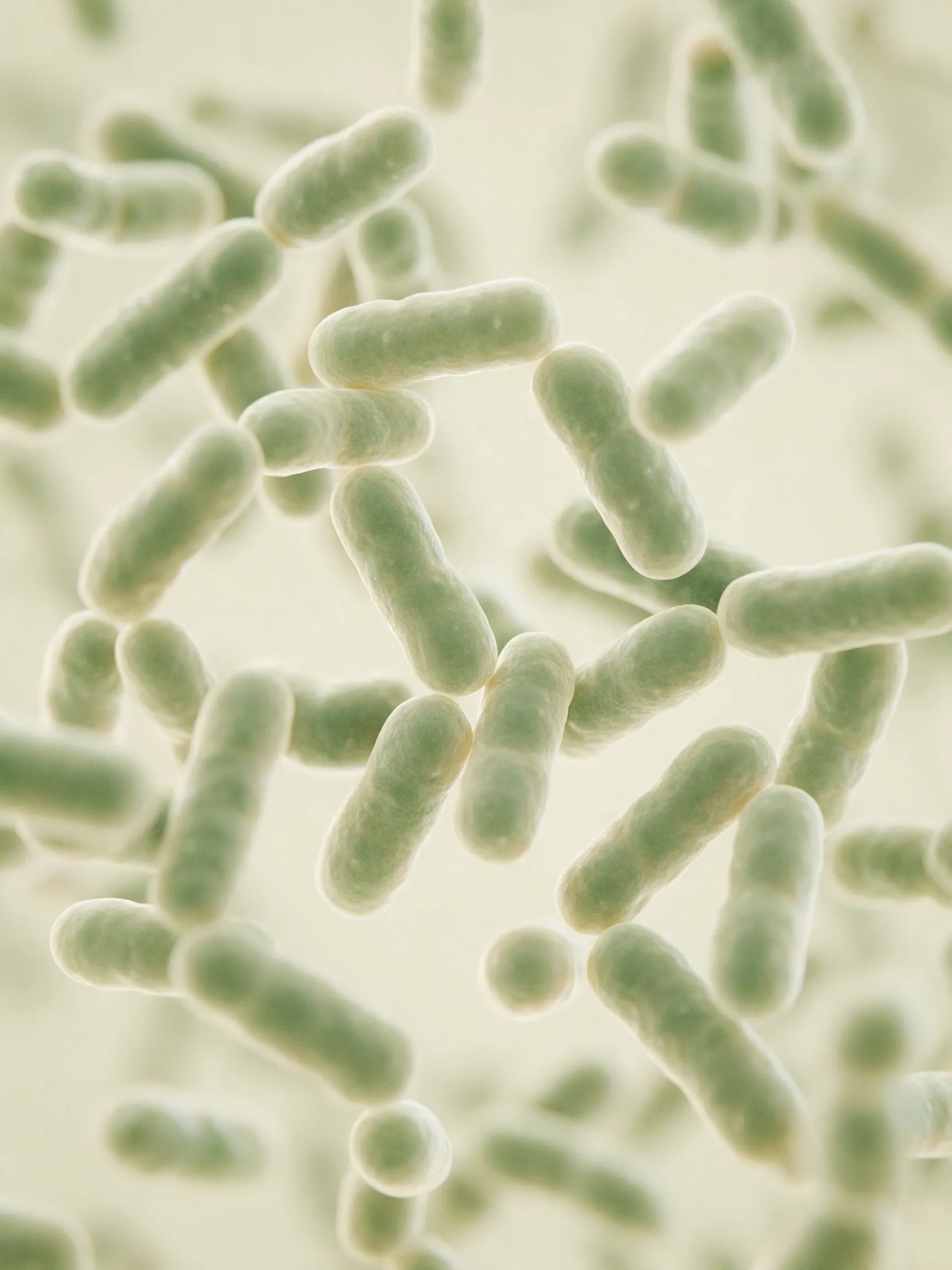
Inactive, but with their structure intact
Although they are inactive, paraprobiotics keep relevant structural and biochemical elements:
Cell walls
Such as lipopolysaccharides (LPS) or lipoteichoic acids.
Peptidoglycans and surface proteins
Which can be recognised by cell receptors (such as TLRs or NODs).
Bacterial DNA
Which can trigger immunomodulatory cell signals.
Residual or intracellular metabolites
Produced before inactivation (enzymes, peptides, etc.).
At the interface between the mucosa and the body
Paraprobiotics can act where the gut-associated lymphoid tissue is located. Although they do not colonise or compete with the resident microbiota, they interact directly with the intestinal epithelium or with the immune cells in the mucosa, such as:
- M cells in Peyer's patches.
- Macrophages and dendritic cells.
- Pattern recognition receptors (PRRs), such as TLRs, which trigger local regulatory responses.
All of this favours a tolerance or modulation response rather than inflammation.
Different and complementary
Is it alive?
- Probiotic
- Yes
- Paraprobiotic
- No: it is inactivated and cannot multiply
Is it affected by antibiotics?
- Probiotic
- It can be
- Paraprobiotic
- No, because it is not alive
Does it depend on stomach pH?
- Probiotic
- Its survival does
- Paraprobiotic
- No: its action does not depend on viability
Does it need to be kept cold?
- Probiotic
- Some do
- Paraprobiotic
- No, it keeps at room temperature
Lysates of microbiota strains from young, healthy people
Made from selected probiotic strains that have been shown to be safe in humans.